[Nadine Naber] also talked about how transgendered Arab feminists are being forced into terrible positions in bathrooms–when a woman assumes a transgendered woman is indeed an Arab male–the assumption then becomes “What is this Arab male doing in a woman’s bathroom? Is he there to blow the place up?” Thus, transgendered Arabs are not only dealing with the prospect of being beaten up for being a man in a woman’s bathroom, but also being arrested for being a terrorist in a womans bathroom. Naber wrapped up by saying that “an analysis of the lives of women and men doesn’t adequatly cover the experiences of all people” and it’s our jobs as radical women of color to begin examining how we can better confront these forms of violence in our organizing.
Showing posts with label arabs. Show all posts
Showing posts with label arabs. Show all posts
29 January 2007
Using the Restroom while Arab & Trans
From Women of Color Blog (emphasis mine):

23 January 2007
Girl Germs
Arab women bloggers have been speaking directly to my heart this week! Amal at Improvisations: Arab Woman Proggressive Voice writes:
I was reminded of such a life-changing moment this morning. I was 14. Your typical painfully self-conscious, self-centered, angular, awkward girl. A "good girl" to boot: the "from home to school" type, with the occasional visit to a friend's house. One day on such a visit, I ran into my friend's parents sitting with other relatives. Doing what I'm expected to do, I approached them to shake hands, as it is the habit. When I extended my hand to the father, my hand just hung there. All alone. Not met. Spurned. Rejected. Embarrassed. Humiliated. The man muttered a quick greeting that I didn't hear. I went deaf. I became all Hand. Hands don't have ears or mouths or eyes. But, god, do they feel!!I don't have anything more to add at this time, but this post did get me thinking about Muslim and Arab cultural niceties expected of young women. I am Arab American, emphasis on the American, and when I went to Amman in 2000 I was sixteen and hadn't learned these niceties. I don't know if you've ever had the pleasure of being the only one in a large group of people for an extended period of time who isn't acclimated to their social mores and modes of interaction--if you are an immigrant maybe you know what I'm talking about--but it's not easy. When I accepted gifts from people and was later told that when someone offers me something, I am supposed to refuse it at first and only accept if they insist, I was so embarrassed. When my Tata hissed at my cousins and I, saying we were like whores because we were laughing on the street, I felt stifled by all the rules. When I kissed a distant uncle, who I hadn't seen since I was nine, and my aunt told me I shouldn't greet men that way, I thought, "Damn, I can't do anything right." And to this day I get slightly upset when strangers [who are Arab or who I perceive to be Arab] offer me things, like for example their chair at a crowded event, because I almost feel as thought I'm being tricked! On Fridays when I pass the men leaving the Islamic Center by my house, I keep my eyes down, but when I am in the street with my friends I talk and laugh as loud as I want to.
The whole encounter took seconds but lasted a life time. That was the first time I learned that some Muslim men won't shake my hand. Even at 14 I have shaken many a man's hand--cousins, uncles, family friends, neighbors, strangers--but this was my first encounter with a Muslim man who refused to shake hands.
I didn't like it. I didn't like it one bit. I wasn't interested in knowing the theological justification for it; I didn't do research to see which Muslim school allowed a man to shake hands with a woman and which didn't. I didn't give a damn. I only cared about how it made me feel--about my body and my female being. It wasn't a good feeling. I wanted to disappear and wished the ground would open and swallow me. I shrank, physically and psychologically. I wished I had no hands, no breasts, no lips, no eyes, no thighs, no vagina. I wished I were nothing.
And I smarted for weeks. Exactly the way I smarted years later when a jerk grabbed my breast in a crowded street in the Old City of Jerusalem.
16 January 2007
“We’re friends?! You can’t even pronounce my name."
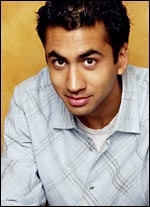 Earlier this evening I saw Kal Penn in a commercial for "24," a show I have never watched and didn't know he was on. As I learned, he plays a character that is new to the show, but familiar to viewing audiences worldwide: The brown Muslim terrorist.
You can read a recap of the episode at Sepia Mutiny, here: My Neighbor, The Terrorist. My favorite part?
When Mr. Wallace’s teenage son asks, “Why are you doing this? We’re friends,” Amar responds, “We’re friends?! You can’t even pronounce my name. It’s not Aw-med. It’s ACCCCCCH-med.”
Hahahahahahahaha!!! While the rest of this character's portrayal is riddled with stereotypes, this piece of it actually rings so true to me. I have actually said this to people before! And here we have the root of increased identification with terrorist groups among Western Muslims and other assorted brown people: The West's collective inability to pronounce our names, to show us respect and to count us as humans and citizens.
15 January 2007
Fears of Sectarian Violence in Detroit
Via the CulturalConnect:
Attacks on Detroit Iraqi Businesses--Revenge By Other Arabs?New America Media, News Report, Mohamad Ozeir, Posted: Jan 12, 2007
EDITOR'S NOTE: Recent vandalism of Iraqi-owned businesses in Detroit could be a retaliatory act by other Arabs for Iraqi Americans' recent celebration of the hanging of Saddam Hussein. Arab Americans trying to maintain a united front after Sept. 11 are worried the incident could split their community, writes NAM contributor Mohamad Ozeir.
DETROIT -- In what could be retaliation for some Iraqis' open celebration of the execution of Saddam Hussein, several Iraqi American-owned businesses and community offices on Warren Ave. in this city's west side were recently vandalized.
The damage, however, was more than the sum of the broken windows at three Shiite religious centers and nine stores and restaurants. It reveals fissures among groups within an Arab American community that is trying to maintain a united front following the Sept. 11 terrorist attacks.
As the news of Saddam’s execution on Dec. 30 was broadcast, hundreds of Iraqi Americans took to the streets here, dancing, chanting and waving the Iraqi flag. They celebrated the death of a dictator who drove them and their families into the desert after the uprising that followed the first American invasion of Iraq in 1991. CNN, Al Jazeera and other TV networks covered the community celebration live.
Most of the Shiite Iraqi community in Detroit originally came from southern Iraq, where the majority was pushed out of their homes by Saddam. They spent a few years in Rafha refugee camp in Saudi Arabia before they were granted visas to the United States.
A week after Saddam’s execution, the Shiite religious centers and businesses near where the celebration on Warren Ave took place, were vandalized. A security camera showed images of unknown persons carrying stones under their coats and smashing windows, according to the owner of one damaged store.
While Detroit police have not made any arrests and the Federal Bureau of Investigation is looking into the incident to determine if it is a federal offense, the nature of the assault is clear to its victims as a retaliatory act carried out by pro-Saddam elements against the Iraqi community.
“Judging from the targeted buildings, the message is clear,” says Ali Zwein, director of Al-Kufa Cultural Forum, one of the damaged religious centers.
The manager of Al-Rafedain restaurant, Sammar Ahmad, told reporters that she received threatening phone calls in both Arabic and English. Employees of other businesses gave similar accounts of prank calls and threats after the celebration.
News of the attacks was a top story for local television and newspapers, with mainstream media simply characterising them as a conflict between pro-Saddam Sunnis and anti-Saddam Shiites. Arab American organizations, however, kept a noticeable silence.
“It is obvious that the leadership of the establishment in the Arab community is lost somewhere between dismissal and denial,” says an Iraqi American activist, who didn’t want his name publicized.
Although Arab Americans have been victims of retaliation and racist attacks since Sept. 11, this incident would be the first reported case of violence within the community, if proved as the act of other Iraqis or Arab Americans.
Osama Siblani, publisher of the Arab American News and head of the Arab American Congress, told reporters, “I don’t believe it’s the Arab community that has done this.” However, he described the celebration of Saddam’s hanging as in “poor taste.”
Imad Hamad, director of the leading Arab American advocacy organization, the Arab American Anti Discrimination Committee (ADC), counseled caution, telling the Detroit Free Press, “I want to believe it’s isolated and it’s an act of ignorance. We don’t want people to panic and take it beyond what it is.”
Emad Alkasid, editor of the weekly Iraq Sun, says these kinds of statements show a double standard in the Arab American establishment. Both Siblani and Hamad are known to oppose the American invasion of Iraq and are very vocal in defending Arab American interests, but Alkasid was disappointed that both leaders did not take a stronger stance against the violence directed at the Iraqi community.
Touring some damaged places, Alkasid says, “No one (from the organizations) came here to show support. They did not even send reporters to cover the story. If this was done to other Arab Americans we all know how the organizations would react, but when it comes to our community, they don’t show any support because they don’t agree with our politics.”
Alkasid warns that “as Arab Americans we have suffered a lot of double standards by politicians and the media in this country and we should know better than doing the same to ourselves.”
The Arab media in the Middle East covered the incident, with an Agence France Press report saying the vandalism was triggering fears of sectarian violence between Sunnis and Shiites in the Detroit Area.
“The real fear in the community is not more violence along religious lines,” Alkasid says. “What we fear is the Arab American establishment considering us a second class community among Arab Americans.”
12 January 2007
Arab Reaction to Saddam's execution
This was so good I had to post it.
From the BBC: Arab reaction to Saddam execution
From the BBC: Arab reaction to Saddam execution
Former Iraqi leader Saddam Hussein has been hanged. His sentence was carried out for the killings of 148 Shias in Dujail in the 1980s following a failed assassination attempt.People from Iraq and the wider region talk to the BBC about their reaction to the news of his death.
These accounts were translated from Arabic by Redouan Ahmimed of BBCArabic.com.
SA'AD HASHIM, 34, NASSYRIA, IRAQ
The execution of Saddam was an unavoidable necessity. My feelings are mixed: I am neither happy nor sad because the execution itself will not change anything.
However, I think there is a wide sense of relief among Iraqis that justice has at last been delivered.
I believe there will be no retaliatory acts despite all the reported security and military measures taken by the Iraqi government. The situation will not be worse than it is now.
Regarding the impact of Saddam's execution upon Arab public opinion, the problem is that Arabs tend to view Saddam as the longed-for nationalist hero of the Arab nation.
Arabs view things only from an ideological perspective. I hope the execution of Saddam will help end this state of affairs.
SHEELAN TALIBANI, 34, KURD CURRENTLY RESIDING IN THE UK

Filming his execution and airing it is inhuman
Filming his execution and airing it is inhuman. There is no difference between those who are behind his execution and those who kill hostages and air the images.
Punishments and revenge are not important. What is important is hearing the truth about other cases, such as in Halabja and the crimes committed by Mohammed Amza Zubeidi. Despite my deep sympathy with the victims of Dujail, these other slaughters are as significant.
By executing Saddam in this way, the United States wanted to say that she has achieved a symbolic victory after it had failed to achieve a real victory.
I don't believe the situation in Iraq will change by executing Saddam. At the beginning, the scale of violence might increase but people will forget very quickly.
Some regimes may now contemplate their positions following the execution of Saddam. Many leaders are like him - the only difference was that he was given the opportunity to commit the crimes he did.
ALI AL HAIDARI, 38, DUJAIL, IRAQ
I was a witness for the prosecution in the Dujail trial and so I feel that I have contributed to the delivery of justice.
To those who argue that Saddam is a human being and an old man - what about the rights of his victims?
The execution of Saddam is, in itself, a protection of human rights.
For me, the case is closed now as I was able to fulfil my promise to the martyrs killed by Saddam. As a people, Iraqis don't know revenge.
Regarding Arab peoples, they know quite well that Saddam was a dictator. We may witness some demonstrations but they will be very limited in scope as they don't reflect the main trends of the Arab public opinion.
ABDEL RAHMAN OMAR SAMEER, 24, EGYPT

It is true that Arabs are suffering terribly at the hands of their rulers. But the Americans have not come to Iraq to spread justice and democracy - but rather to serve their own interests.
Arabs and Muslims should remember that the execution of Saddam is not just the execution of a single person but rather the execution of an Arab and Muslim exemplary figure.
The execution of Saddam will not help improve things at all. There is strong probability that this will make matters worse.
Arab people may feel sad but this feeling will be a short-lived one. I don't think the end of Saddam will stir things up.
I had hoped that the execution would have upheld the position of those advocating reforms and democracy in the Arab countries. But the Arabs have a short memory.
MOHAMMED MAHDI ALI, 35, IRAQI RESIDING IN LONDON

The execution of Saddam is a fulfilment of the wishes of honest and patriotic Iraqis.
Saddam has condemned hundreds of thousands of Iraqis to death and destroyed Iraq.
Saddam should not have received a fair trial in the first place because he denied thousands of Iraqis killed by his regime the opportunity to defend themselves.
I expect serious negative repercussions for Iraq as the supporters of Saddam will resort to indiscriminate killing.
However, the execution will be the beginning of the end for his suppoerters who pretend to be devout Muslims and freedom fighters.
The fate met by Saddam Hussein will help Arab public opinion rid itself of the illusion that he was an Arab nationalist leader.
The problem is that most Arabs are emotional and don't think realistically. I believe the execution of Saddam will shock them. I expect demonstrations and marches in some Arab countries.
I support the execution as he was a tyrant and destroyed the lives of many people.
AHMED WIT WIT, 27, IRAQ

It is a just ending, albeit too late in coming. I will carry my bag that was worn out by long travels and return to my country.
I was a sad lonely man living with my remaining papers in my drawer. I was waiting for this day so that I could return to my county like a bird who fly freely.
The end of Saddam will have a positive impact on the political and social life in Iraq as well as security situation and democracy.
His execution will put an end to the acts of killing, violence and the widespread administrative corruption.
The current government should resume the reconstruction efforts and bring security to Iraq.
The execution will deprive the Iraqi government of excuses for poor performance.
The Arab homeland notion is a big lie coined by Arab rulers to deceive Arab people. Such nationalistic notions will die with the execution of the biggest liar.
The end of Saddam is the beginning of an end to similar governments in the Arab world.
MOHAMED MAHMOUD, 22, EGYPT

I may have sympathy for him as a human being, but I am more inclined to develop a sense of relief, as he deserved what happened to him.
He was president of Iraq, responsible for the destruction of his country and the invasion of Kuwait.
This is the end of every oppressor. He not only inflicted oppression and injustice and brought poverty to Iraqi people but to the entire Arab nation as he squandered the resources of an Arab country.
I believe Saddam supporters are responsible for some acts of violence perpetrated in Iraq in revenge for what happened to him. However, the majority of Iraqis will have a sense of relief at his execution.
For Arabs, some people may sympathise with him as he is an old man executed by the occupation. The problem is that the occupation has participated in his trial.
I expect Saddam's fate will serve to encourage reformists and advocates of democracy in Arab countries.
SAFAA AL AYACHI, 29, BAGHDAD

This man has launched three wars, and killed at least a million Iraqis including scholars, researchers and students. He killed them only from suspicion.
Though he ruled one of the richest countries in the world, he impoverished his own people.
Saddam unleashed a band of criminals to inflict pain upon Iraqis. Now we have started putting our feet on the right path towards justice.
Some Iraqis feared that Saddam may escape from his prison or that he may make a deal with the Americans. Many Iraqis used to believe that he is the only one capable of bringing security to the country.
I believe the scale of violence will considerably decrease. Arabs, leaders and politicians should learn from this important, significant lesson and put the interests of their people above anything else. The execution of Saddam will strengthen the will of Arab people for democracy, change and reform.


Subscribe to:
Posts (Atom)


